Mandatory card acceptance in 2027: what applies, what is planned — and what I make of it
Today there is no obligation in Germany to accept cards — there is a key-points paper from the Federal Ministry of Finance of 11 September 2026, a cabinet decision planned for this year and entry into force in 2027. What of that is law in force, what is merely intention, and why the ban on minimum amounts is the most expensive line of the paper for small tickets.
The short answer
Mandatory card acceptance does not apply in Germany today: there is no law and no published bill, but a key-points paper from the Federal Ministry of Finance which was reported on 11 September 2026. What is planned is a cabinet decision still in 2026 and entry into force in 2027 — anyone being asked to sign a terminal contract today by reference to “the obligation” is being pushed to sign on the basis of an intention, not a legal position.
What applies today
No merchant is obliged to accept cards. Anyone who wants to may take cash only. Two rules nevertheless already apply, and they are regularly confused:
Section 270a BGB renders ineffective any agreement under which a customer is to pay a charge for using girocard, regulated consumer debit and credit cards, SEPA credit transfer or SEPA direct debit. The famous 50-cent card surcharge is therefore not enforceable in consumer business. Corporate cards and three-party systems such as American Express are exempt — but section 312a(4) BGB still applies there, permitting a surcharge only where a common free-of-charge alternative exists and the surcharge does not exceed actual costs.
The minimum amount is something different from a charge: the business refuses the payment method instead of making it more expensive. In statutory terms that has not been conclusively decided in Germany, and there is no ruling from the highest courts on it. What binds in practice is your own acceptance contract, because the card schemes' rulebooks require the unconditional acceptance of validly presented cards. That is enforced not by an authority but by the acquirer — a customer cannot sue for the right to pay by card. So anyone sticking the “cards from 10 euros” note on the till today is breaching their contract rather than a law.
What the key points envisage
| Point | Key-points status 11 September 2026 | Current legal position |
|---|---|---|
| Digital payment option alongside cash | mandatory everywhere payment is made on site | no obligation |
| Choice of scheme | the business chooses, at least one European scheme | free decision |
| Minimum turnover thresholds | ruled out | contractually binding, statutorily unsettled |
| Additional charge for the customer | ruled out | section 270a BGB, with exceptions |
| Exemptions | amateur and non-profit clubs, street festivals, flea markets | not applicable |
| Hardship cases | under examination | open |
| Sanctions | not named | none |
The wording on small amounts is more precise than the debate reproduces it: acceptance must not be made dependent on “turnover thresholds”, the Deutsche Handwerks Zeitung quotes from the key points (11 September 2026). What today is required only by the card contract would thereby become law — with the difference that a breach would then concern not only the acquirer but an authority. There was no press release of the ministry's own on this; the factual position rests on the reporting of 11 September and is provisional until the cabinet decision.
The sum that decides 2027
For most businesses the obligation is a formality. According to the Bundesbank study on payment behaviour, 55 per cent of recorded purchases were already paid cashlessly in 2025 (Bundesbank, 17 June 2026), and the Deutsche Kreditwirtschaft reported around 1.397 million active girocard terminals for the first half of 2026 (25 August 2026). It only gets expensive where the ticket is small — and those are precisely the businesses that lose their previous protective instrument with the minimum amount.
Model calculation, girocard, two widespread pricing models: A at 9 cents per transaction plus 0.25 per cent, B as a flat rate of 1.39 per cent with no fixed fee. The percentages are orders of magnitude from public provider and comparison sources, not the terms of any particular contract; the arithmetic can be checked.
| Ticket size | Model A (9 ct + 0.25 %) | As a percentage | Model B (1.39 %) |
|---|---|---|---|
| €1.80 bread roll | €0.095 | 5.3 % | €0.025 |
| €3.50 coffee | €0.099 | 2.8 % | €0.049 |
| €7.90 | €0.110 | 1.4 % | €0.110 |
| €12.00 | €0.120 | 1.0 % | €0.167 |
| €36.12 (average girocard ticket, H1 2026) | €0.180 | 0.5 % | €0.502 |
The break-even is at a ticket size of around 7.90 euros. Below it the pure percentage wins, above it the fixed fee — and no advertising claim in the world changes that, because it is plain arithmetic. A bakery with 300 tickets a day at 3.50 euros and 300 trading days pays around 8,890 euros a year on model A and around 4,380 euros on model B: a difference of about 4,500 euros, purely from the choice of model. The assumptions are freely chosen; the result holds qualitatively for any small-ticket business.
What the European scheme means in practice
The clause “at least one European scheme” is meant in industrial-policy terms and is favourable for merchants: girocard and Wero carry the lower charges at the point of sale, because interchange on consumer debit cards is capped at 0.2 per cent. Two constellations would mainly be affected: terminals that have only international schemes enabled, and SoftPOS or wallet solutions without native girocard acceptance. That is not a new purchase but usually an activation — one you should, however, have confirmed in writing by your payment network operator before you pay for it.
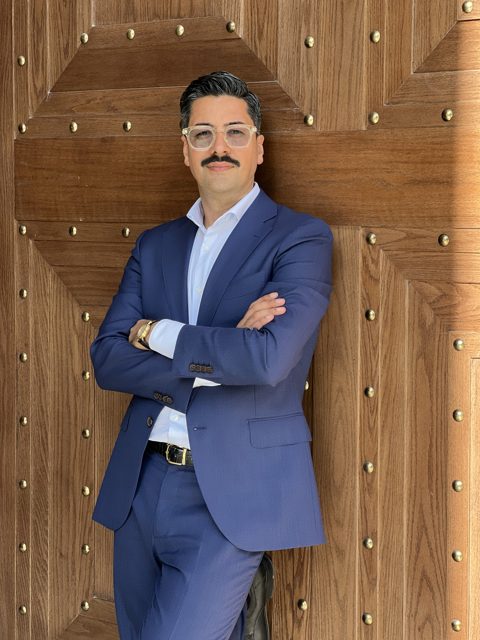
What does Pedram Dadgar say about mandatory card acceptance?
I sell card terminals and still consider the obligation the lesser issue. The market introduced it long ago: the customer without cash leaves, and the second time round they do not come back. What bothers me is the use the sales trade makes of this paper. For a year and a half, bakeries and hairdressers have been sold on a law that does not exist, and now the key points supply a year number for it too. Anyone signing under time pressure signs a 48-month term and a pricing model that does not fit their average ticket — and because section 270a BGB prohibits passing it on, every cent of it comes out of the margin.
To the legislator I would say: if the state compels businesses to accept cards, then full, itemised disclosure of costs before the contract is signed belongs in the same law. And to the associations currently up in arms: the ban on minimum amounts is the point at which they should be doing the sums, not the obligation itself. Anyone going into negotiations in 2027 without their own figures pays for the obligation twice.
What to do now
- Write down two figures: average ticket size and number of tickets per day. Without them no offer can be assessed.
- Determine the share of tickets under five euros — it decides whether a flat rate or a fixed fee plus percentage is cheaper.
- Check which schemes the existing terminal really accepts, girocard and wallets included, and have the activation confirmed in writing.
- Convert offers into total costs per 1,000 euros of turnover, separately for girocard and international cards, instead of comparing monthly rentals.
- Look up the term and notice period of the existing contract before demand picks up in 2027.
- No signature on the day of the visit, and none whose justification is “mandatory from 2027”. Nothing is binding until the cabinet decision.
- Follow the legislative process: the cabinet decision and any hardship provision decide whether your own business is covered at all.
Sources
- ZDFheute: Neben Bargeld auch Kartenzahlung als Pflicht (11.09.2026)
- Deutsche Handwerks Zeitung: Jedes Geschäft muss bald auch Kartenzahlung anbieten (11.09.2026)
- § 270a BGB — Entgelte für die Nutzung bargeldloser Zahlungsmittel (gesetze-im-internet.de)
- § 312a Abs. 4 BGB — Entgelt für die Nutzung eines Zahlungsmittels (gesetze-im-internet.de)
- Deutsche Bundesbank: Zahlungsverhalten in Deutschland 2025 (17.06.2026)
- EURO Kartensysteme: girocard-Halbjahreszahlen 2026 (25.08.2026, Presseportal)